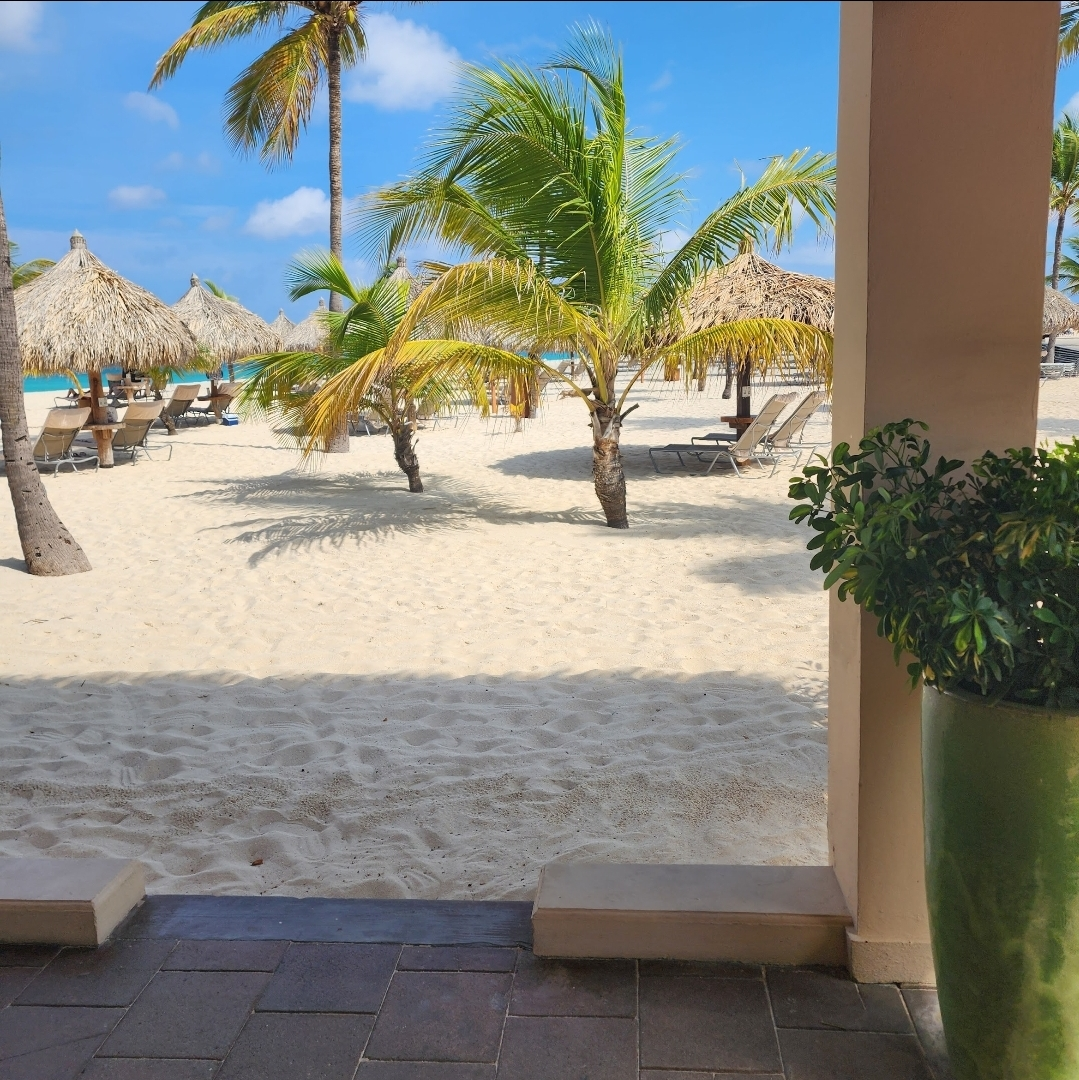
 For the longest time, I thought international travel was for women who had it all figured out. Like… passport always ready, itinerary color-coded, and somehow never overwhelmed.
 For the longest time, I thought international travel was for women who had it all figured out. Like… passport always ready, itinerary color-coded, and somehow never overwhelmed.
Meanwhile, I’m over here like: I want to go… but where do I even start? How much is it going to cost? What if I book the wrong area and the whole trip feels off?
That’s why I love Aruba as a first international trip (or a “we need a reset” trip). Aruba is one of those places that doesn’t make you work hard to enjoy yourself. The island is straightforward, the vibes are consistent, and you can build a trip that feels soft, safe, and grown—without spending luxury-resort money.
And if you’re planning this as a couples trip or a family trip, Aruba is especially clutch because you can do beach + culture + food without turning your vacation into a marathon.
Table of contents
- For the longest time, I thought international travel was for women who had it all figured out. Like… passport always ready, itinerary color-coded, and somehow never overwhelmed.
- Why Aruba is “starter-friendly”
- Aruba map: where you stay matter
- Budget-luxe game plan
- Getting around without stress
- What to do: beaches + culture + food
- Aruba for couples and family
- What to pack: hair/skin/sun
- Common mistakes
Why Aruba is “starter-friendly”
Aruba feels like a good first step because it gives you options without overwhelming you. You can have an itinerary… or you can just breathe. You can do excursions… or you can make “rest” the main event and still feel like you traveled. When I say “starter-friendly,” I mean: you don’t have to do the most to enjoy yourself.
- You can fill out Aruba’s ED Card within 7 days before travel, so it’s not a months-long process.
- Aruba has a $20 Sustainability Fee for visitors arriving by air (you’ll see it during the ED card process).
- Aruba’s tap water is known for being safe to drink (but if you’re like me… I still get bottled water)—so you can skip constantly buying bottles.
It’s also the kind of place where you can build your days around simple wins:
- A calm beach morning
- A cute lunch somewhere with a view
- A little culture and color (without having to over-plan it)
- A nice dinner that feels like a moment
If you’ve been wanting to travel but you’re anxious about planning, Aruba doesn’t punish you for being a beginner. It rewards you for showing up.

Who Aruba is perfect for:
First-time international travelers who need a win
Couples who want a romantic trip that still feels easy
Families who want beach + a few adventures without chaos
Aruba map: where you stay matter
Let me say this with love: where you stay matters more than people admit—because Aruba has different “energies,” and if you pick a base that doesn’t match your vibe, you’ll spend the whole trip trying to force it.
Think of it like this: your hotel area decides whether your trip feels like “easy vacation mode” or “why is everything a mission?” Aruba isn’t hard, but the wrong location can make it feel harder than it needs to be—especially for couples and families.
If you want lively + walkable (vacation life on autopilot)…
Stay around Palm Beach / Noord.
This is the “everything is right there” part of Aruba. If you want to roll out of bed, grab coffee, walk to dinner, pop into a store, and still end the night with options—this is that area. It’s very resort-forward, with a steady flow of people, music, and activity.
For couples, Palm Beach is great if you like a trip that feels social and fun—easy date nights, spots to grab a drink, and that “we’re outside” energy without planning too much. For families, it’s convenient because you’re close to a lot, and the days can be simple: beach → lunch → quick break → dinner without long drives.
What to know before you book: Palm Beach can feel more touristy and busier, and depending on where you stay, it’s not always the “quiet soft life” vibe. It’s more like: soft life… with background noise. If you’re someone who wants silence and slow mornings, you might feel overstimulated here (unless your hotel setup is super calm).
If you want calm mornings + softer vibes (slow, pretty, and peaceful)…
Look around Eagle Beach.
Eagle Beach is the “take your time” side. The pace feels slower, the beach feels more spacious, and the overall energy is calmer. This is where you stay when the goal is: rest, romance, and minimal chaos.
For couples, this area gives that “soft getaway” feel—quiet mornings, sunset walks, and less pressure to be doing something every minute. For families, it’s also a win if you want a calmer beach day without a lot of extra stimulation.
What to know before you book: You may not be able to walk to as many restaurants or nightlife options depending on exactly where you are, so this is where having a car (or planning a few taxi rides) makes your life easier. Eagle Beach is perfect for people who want the trip to feel like a reset—not a party.
If you want local flavor + culture nearby (more city, more real-life Aruba)…
Consider Oranjestad.
Oranjestad is the capital, so it feels more city-like than resort-like. This is where you’ll get colorful streets, local shopping, cultural stops, and an “I’m actually seeing Aruba” vibe. If you’re the kind of traveler who likes to explore in the daytime and keep nights simple, Oranjestad can be a great base.
For couples, it’s cute if you want culture + food + strolling as part of your dates. For families, it can work well if you’re planning to drive around anyway and you want easy access to shops, quick meals, and daytime exploring.
What to know before you book: Oranjestad isn’t as “wake up and walk onto a resort beach” depending on where you stay. It’s more of a “we’re going out and doing things” area. If you want resort-style beach access every day without moving much, Palm or Eagle might fit better.
If you want murals + that “real Aruba” feel (color, art, slower pace)…
The San Nicolas / Baby Beach side is where you go for the color, the murals, and a more local pace. It feels different from the hotel-strip version of Aruba—less polished resort energy, more character. This is also where you plan a Baby Beach day, which is a favorite for families because the water is often calmer and more shallow.
For couples, this side is perfect for a day where you want to feel like you discovered something—mural photos, a slow lunch, a scenic drive, and then you head back. For families, it’s a great “day trip zone” because you can build an easy adventure without overdoing it.
What to know before you book: This side is easiest with a car. If you stay over here, you’re choosing a quieter, more local experience—but you’ll likely have fewer “walkable resort” conveniences.
Budget-mid stay ideas (vibe-based, couples + family friendly)
Lively + easy: Holiday Inn Resort Aruba (Palm Beach) — and yes, the kids eat free perk can really help your budget if you’re traveling with children.
Calm + space: Eagle Aruba Resort — suites with kitchenettes so you can do breakfast at “home” and save money without feeling restricted.
Adults-only couples moment: Boardwalk Boutique Hotel (adults-only) for that romantic, tucked-away energy.
Budget-luxe game plan
Here’s the mindset shift that changed everything for me:
Budget-luxe isn’t spending more—it’s spending on what you’ll actually remember.
If your budget is $1,000–$1,800, you can absolutely make Aruba work if you do this:
The 3-Spend Strategy
- Spend on ONE “main character” moment
(sunset cruise, fancy dinner, spa day, private cabana—pick one) - Save with a breakfast + snack plan
This is why I love a kitchenette. Breakfast, coffee, fruit, and snacks handled? Now you’re not burning money before noon. - Split smart for family travel
Bigger room/suite + a car + groceries = less stress, fewer surprise costs.
Getting around without stress
Okay, let me be honest: a lot of guides will tell you to “just take the bus.”
And yes—Aruba’s bus system exists and it can be convenient on the hotel strip. Aruba’s official tourism site notes frequent service along the hotel area during the day.
But here’s my opinion (and this is where my travel style shows):
If you plan to explore beyond the hotel area—even a little—I recommend renting a car.
Why I recommend a car (my opinion)
- The Arubus day pass is about $15.
If you’re doing that for multiple people or multiple days, it adds up fast—especially for a family. - If you want to go around the island (murals, Baby Beach side, viewpoints, different food spots), a car makes the trip smoother.
- Driving feels very doable. Aruba’s driving guidance highlights that roundabouts are common (cars already in the roundabout have right of way).
And yes, traffic lights do exist on major roads—but overall it’s not the same stress as driving in a big U.S. city. - What I’d choose by trip type
Family trip:
✅ Car rental. This is the “keep the peace” option—snacks in the trunk, less waiting around, easier beach gear days.
Couples trip:
✅ Car if you want freedom + exploring
✅ Taxi/bus only if you’re staying mostly Palm/Eagle and doing 1-2 tours.
Budget-luxe traveler who wants convenience:
✅ Car for 2-3 days (explore days) + chill days near your hotel without driving.
Tiny driving tip: If roundabouts make you nervous, just go slow, watch your lanes, and follow the flow. Once you do two of them, you’ll be like “oh… this is it?”
What to do: beaches + culture + food
This is the part where people mess up: they try to do Aruba like it’s a competition.
Like if they don’t hit seven excursions, three beaches, two “iconic” restaurants, and a sunrise hike… the trip doesn’t count.
And I’m here to tell you—Aruba is not that kind of island. Aruba is best when you let it breathe.
Because the magic of Aruba isn’t just what you do. It’s how the trip feels. And if you stack your itinerary too tight, you’ll spend the whole trip rushing, sweating, and low-key irritated… instead of rested, cute, and present.
The Aruba rhythm that works (especially for couples and families) is simple:
You need one day to do nothing.
You need one day to see the culture.
You need one day to do something that feels special.
And then you leave a little space for the moments that happen naturally—because those always end up being the memories you talk about the most.
The “good trip” rhythm (that still feels like you did something)
Picture it like this:
Day 1: Beach + ease
You float, you eat, you take pictures, you let your body catch up to being on vacation. This is the day you stop checking your phone every five minutes like work is about to call your name.
Day 2: Culture + color
Murals, local bites, little shopping, a slow drive—nothing that requires military-level planning. Just enough exploring to say, “Okay, I really saw Aruba.”
Day 3: Your “main character” experience
This is your special day: semi-submarine, nature park, cruise, rum tour… whatever feels like the moment you’ll remember when you’re back home in real life.
Day 4+: Spontaneous space
This is where Aruba gets good. Because now you can decide based on your mood—rest again, find a new food spot, revisit your favorite beach, or do a quick activity without feeling like you’re behind.
And here’s how I’d build it with the exact experiences you mentioned:
The experiences that feel fun (not exhausting)
1) The semi-submarine: “I can’t believe we’re seeing this” energy
If you want something that feels exciting but still easy, the semi-submarine is such a good choice—especially if you’re traveling with family or you’re a couple that wants a cool shared memory without getting drenched and tired.
The way it feels in real life is: you’re not doing the most… but you’re still doing something memorable.
You basically take a short ride out to the vessel and then you’re looking through the windows like, “Wait… this is actually beautiful.” You get to see sea life and coral, and one of the coolest parts is spotting the shipwreck area—like you’re watching a little underwater world happen in real time. Aruba’s Seaworld Explorer semi-submarine is known for views of the Antilla shipwreck (a WWII-era German freighter) and the Arashi reef area.
Soft-life tip: schedule this on a day where you’re keeping the rest of the day light. Like semi-submarine in the morning → lunch → beach nap → cute dinner. That’s a perfect day.
2) The Butterfly Farm: peaceful, pretty, and surprisingly fun
The Butterfly Farm is one of those activities that sounds “small,” but it ends up being such a sweet memory—especially for families.
It’s calm. It’s colorful. It’s low-effort. And it feels like you stepped into a little tropical bubble.
They do guided tours that are usually around 20–25 minutes, and then you can stay as long as you want (which I love because it doesn’t feel rushed).
Best way to do it: pair it with something nearby and keep the day gentle.
Butterfly Farm → lunch → beach time.
Or Butterfly Farm → quick shopping stop → dinner.
This is also a cute couples activity if you want something different that isn’t “just another beach day,” but still feels romantic and calm.
3) Rum tour: couples-core, grown, and a whole vibe
If you’re doing Aruba as a couple, a rum tour/tasting is such a good “put-together” activity. It’s giving: grown, intentional, and we deserve nice things.
One option is visiting a local distillery like Pepe Margo Distillery, which describes itself as Aruba’s first craft distillery and offers distillery experiences/tours with rum and gin tastings.
Another option is a distillery-style tour/tasting experience at places like Bodegas Papiamento (they offer tastings and tours as well).
How to make it feel like a date:
Do the rum tour in the late afternoon → go back and change → dinner.
That’s a full “couples day” without being exhausting.
Budget-luxe tip: decide before you go if you’re buying a bottle/souvenir, so it doesn’t turn into an unplanned “oops.” (Because tastings make everybody feel generous 😂)
4) Ostrich Farm: funny, unexpected, and family-friendly
The Ostrich Farm is one of those “we’re doing what today??” experiences that ends up being hilarious and memorable—especially for families.
It’s interactive, you learn a little, and yes—you can hand-feed the animals. The Aruba Ostrich Farm describes guided tours where you can even have the opportunity to hand-feed ostriches (and see emus too).
How to fit it into your trip:
This is a great add-on day when you’re already planning to drive around the island. It pairs well with San Nicolas murals and a Baby Beach day so you get animals + culture + beach all in one.
5) Donkey Sanctuary: wholesome, soft, and surprisingly healing
I’m telling you right now: the Donkey Sanctuary is the kind of stop that turns into a core memory—because it’s wholesome in a way that makes you feel calm.
Aruba’s tourism site notes the sanctuary has around one hundred donkeys, and you can do a visit that’s basically hugging/petting time (very “soft-life activity”).
This is such a good family stop, but honestly? Couples love it too because it’s different, it’s sweet, and it breaks up the trip from being all beach + food.
Pair it like this:
Donkey Sanctuary → Ostrich Farm → San Nicolas murals → Baby Beach.
That’s a full day, but it doesn’t feel like a competition day because each stop is short and easy.
Beaches by mood
Family-friendly calm: Baby Beach (shallow lagoon vibes)
Views + a little romance: California Lighthouse for a scenic stop
Nature day: Arikok National Park covers about 20% of the island (note: UTVs/ATVs are banned in the park).
Culture layers (simple but meaningful)
If you want a culture moment that doesn’t feel like homework:
- San Nicolas murals = color, storytelling, and the easiest “culture + content” win.
Food story: my “don’t overspend but eat good” formula
1 fancy meal + 2 local gems + 1 snack crawl
- Fancy meal: your couples date night or “we made it” dinner
- Local gems: where you feel the island (and your wallet doesn’t cry)
- Snack crawl: pastries, smoothies, quick bites while exploring
Two spots that get talked about a lot (and fit the “food story” vibe):
- Yemanja (Oranjestad)
- Zeerovers (Savaneta)
Aruba for couples and family
Couples (soft + romantic + still fun)
My favorite couples rhythm:
- One planned day (tour, beach club, nature day)
- One slow day (sleep in, wander, take pictures, long dinner)
Family (peace-protecting itinerary)
- Short excursions (2–4 hours) instead of full-day marathons
- One calm beach day (Baby Beach is an easy win)
- Early dinner nights so bedtime routines don’t collapse
Reflection question: Do you want this trip to feel like rest, celebration, or discovery?
What to pack: hair/skin/sun
Aruba is sunshine + breeze, so pack for both.
Hair: protective style or low-maintenance plan, satin scarf/bonnet, edge control that can handle heat
Skin: SPF you’ll actually reapply, after-sun care, lip SPF
Shoes: sandals, water shoes, one cute dinner option
Common mistakes
- Overbooking tours (you’ll come home tired, not refreshed)
- Underestimating sun + wind
- Booking the wrong hotel vibe
- Waiting too late to do the ED card (do it within the recommended 7-day window)